



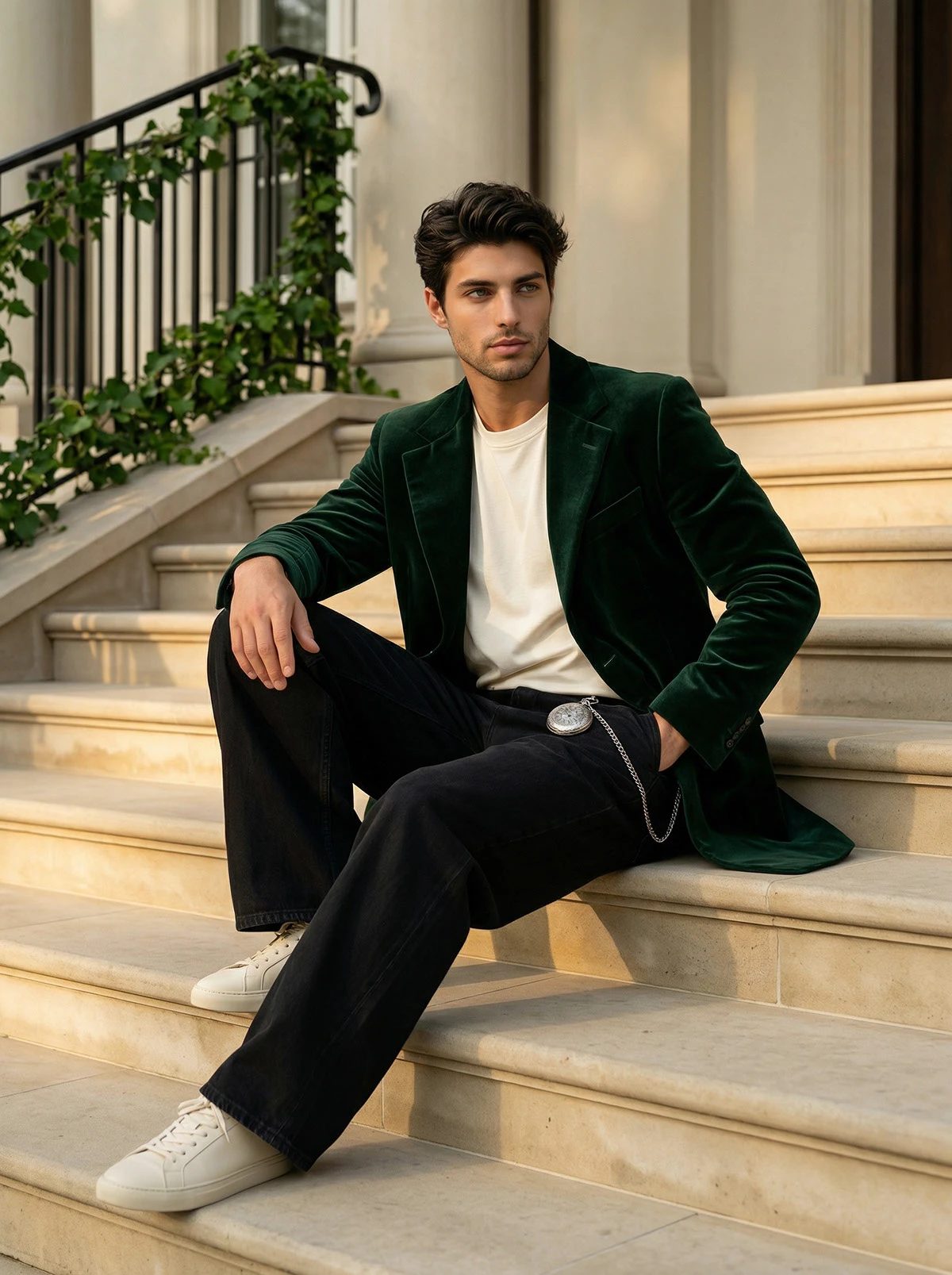
Velvet on the steps
Inheritance, worn lightly.
Some stories begin with cities.
This one begins with land.
Graf by title. Farmer by habit. Dreamer by nature — this is his diary.

Already responsible for more land than most men see in a lifetime: an old manor he brought back to life, orchards his surname promised him, a primeval forest in front of the house and a quiet lake behind it.
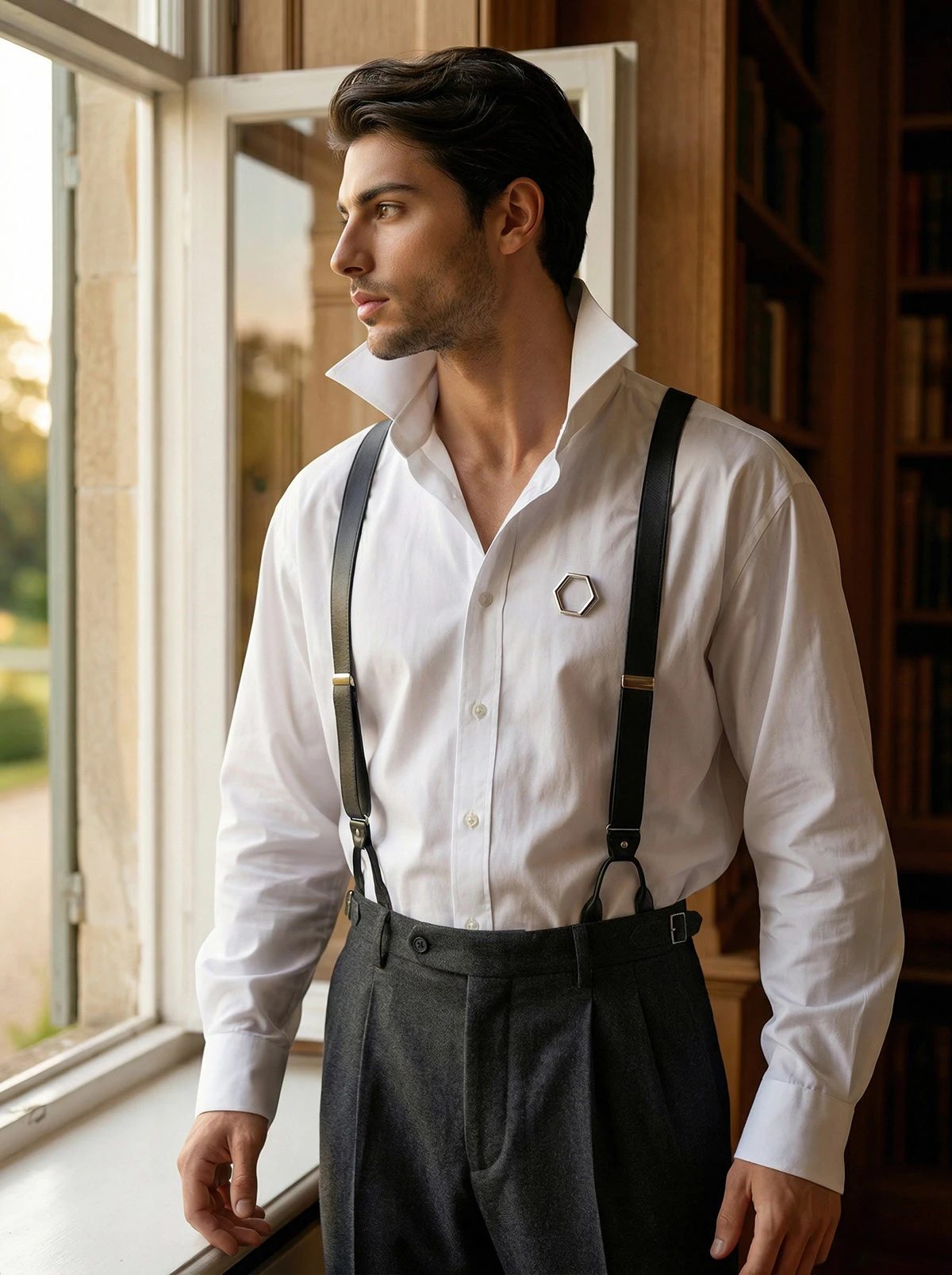
The man
He did not choose the estate in a catalogue. It chose him the way weather chooses a field — by being unavoidable, and his.
The title comes from ancestors whose portraits still watch the library. The work comes from the land itself: grain and sunflowers, orchards of cherry, apple and pear, vineyards, hives under the lime trees. In a few years he has taught a sleeping manor to breathe again — not to preserve the past under glass, but to let it live at modern speed, with muddy boots by the door and a laptop beside the first editions.
Now and then a magazine or a fashion house borrows the caretaker — an editorial, a capsule, a short film. He goes, because a man should occasionally be seen in good light and better tailoring. Then he comes back, because the orchards do not prune themselves.
There are animals here, gardens, workshops, old rooms filled with quiet light. Life here grows slowly — but it grows.
The first pages of the restored estate, bound into one quiet PDF — free, as a gate should be.
The estate
A manor at the end of a white forest road, the letter S in iron and oak leaves above its gate. In front — the puszcza, an ancient forest older than any map of it. Behind — a natural lake with boats, and evenings that arrive over the water.
Oak staircase, crest fireplace, a library — and a few quiet rooms for guests who find their way.
He is Sad-owski, “of the gardens”: cherries, apples, pears, grapes, blueberries, currants, raspberries.
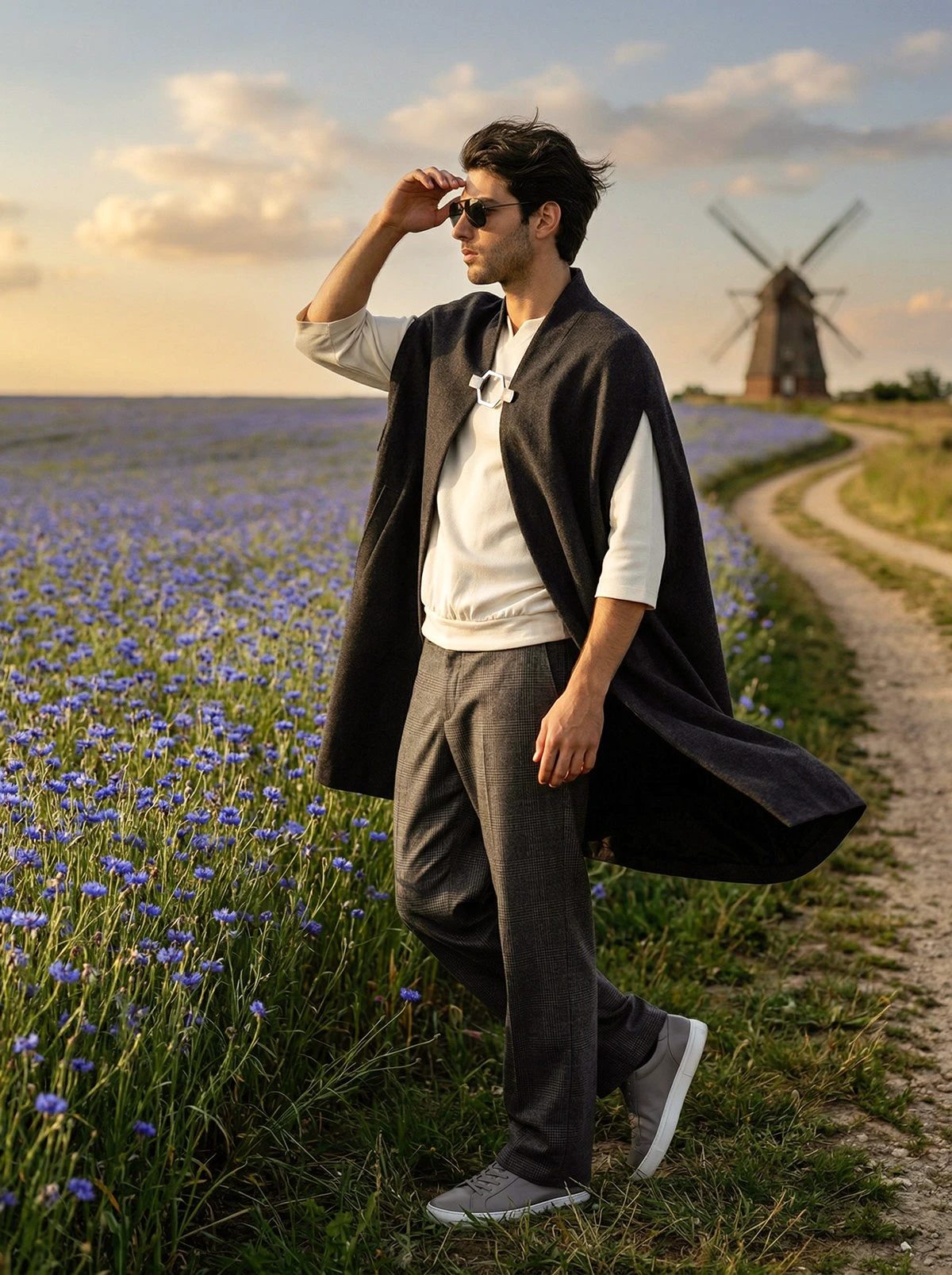
Grain fields, sunflowers, greenhouses, a cheese house, a cellar, a watermill and a windmill that still argues with the wind.
Stables, Highland cows, alpacas, goats and a loud parliament of geese, ducks, hens and rabbits.
Hives under the lime trees. The bees keep their own diary — in honey.
Estate time, kept by the windmill.
It turns — so the day is going somewhere.
The year on the estate
Choose a season — the estate will change its light. It opens, on its own, at the one outside your window.
 02 — 04
From the diary · kept in the evenings
Companions
Every estate keeps animals. This one is also kept by them — supervised, accompanied, and occasionally overruled.
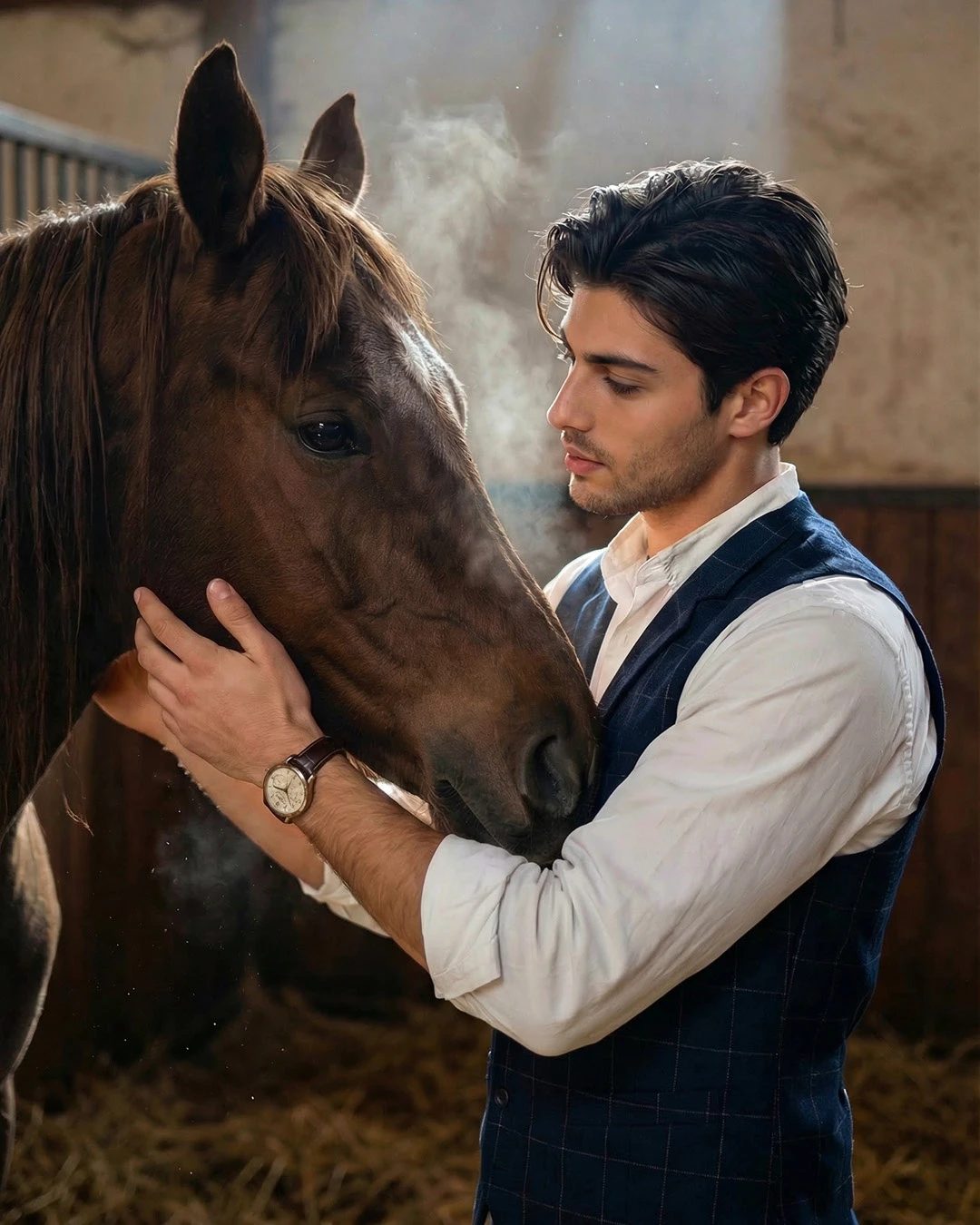
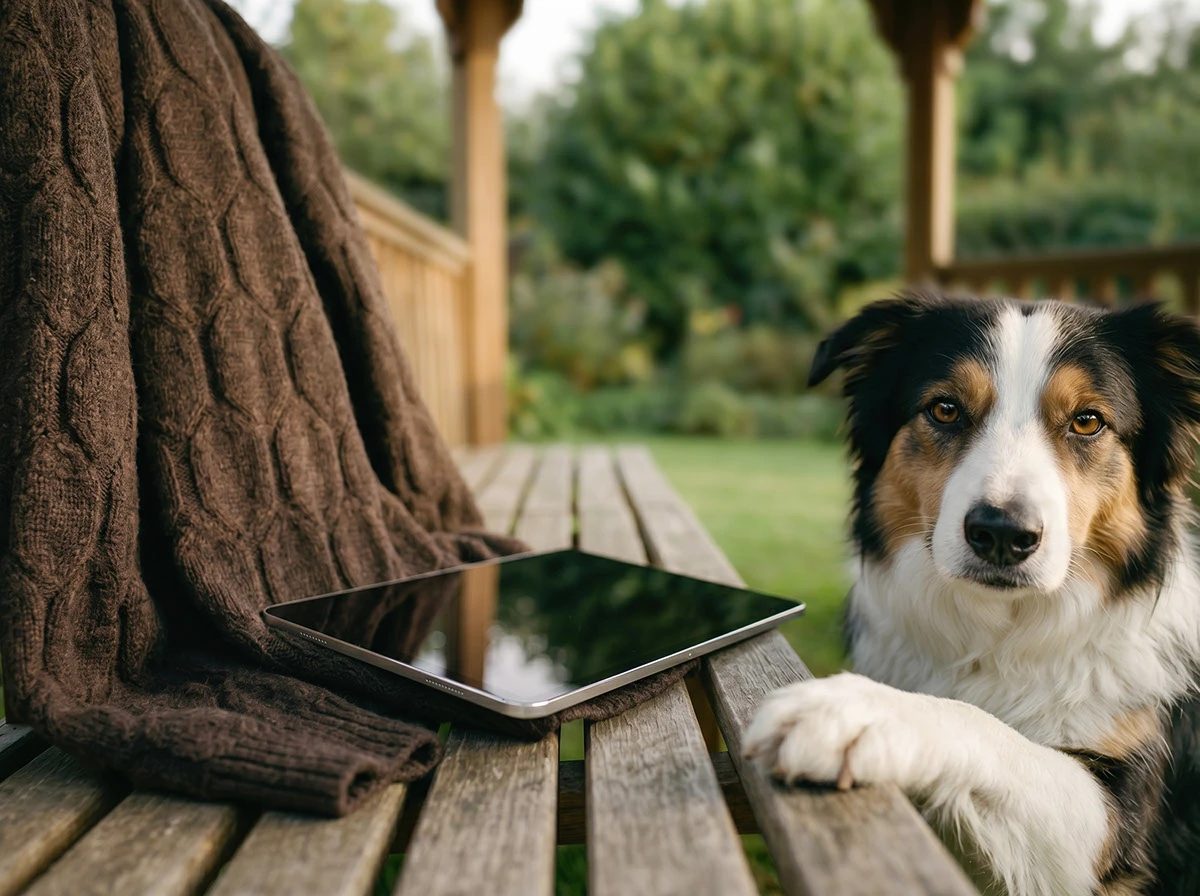
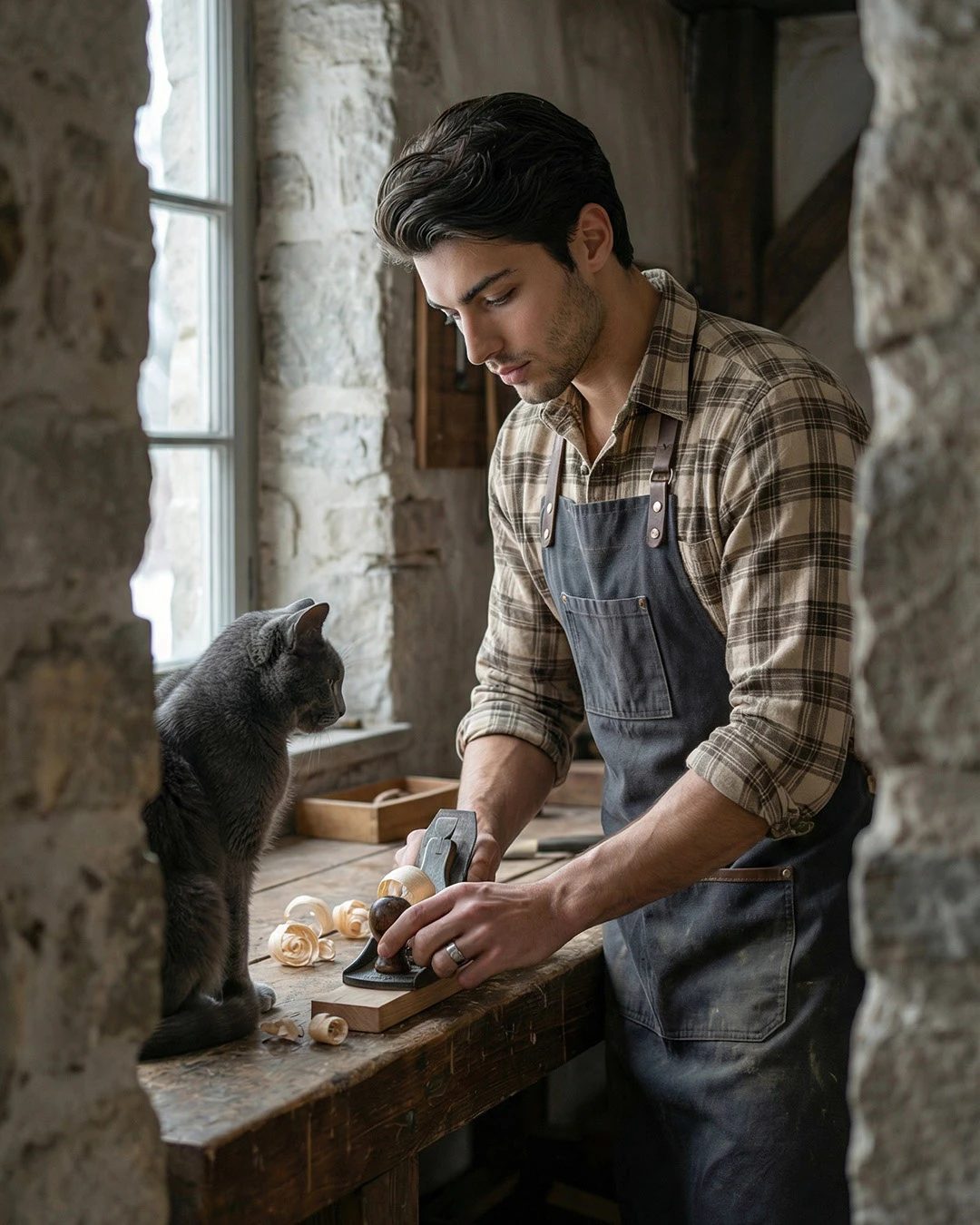
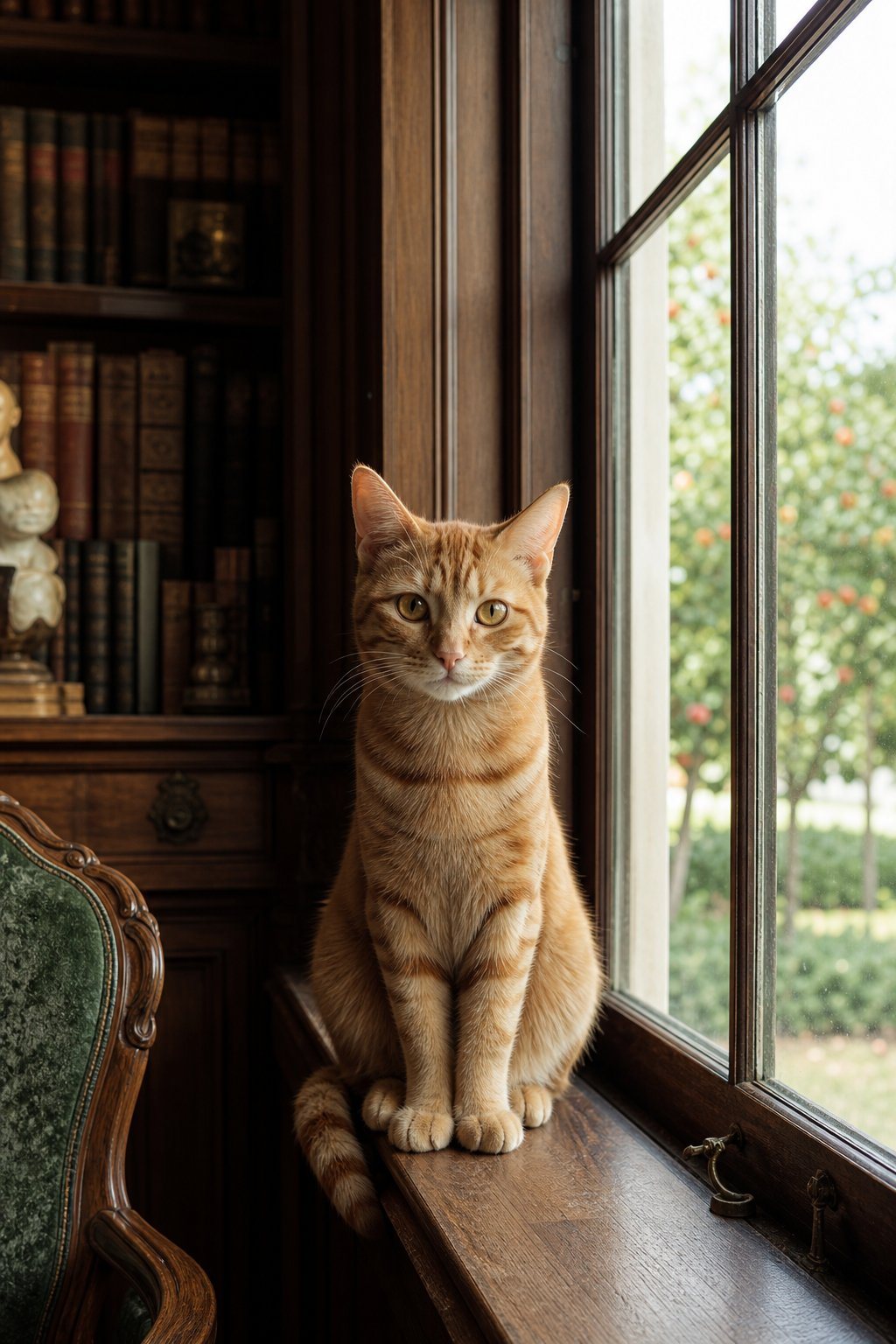
And these are only the ones who answer to names.
The yard goes on out of frame: more horses, cows, alpacas, goats, and a poultry parliament in permanent session. And cats — grey, ginger, striped — arriving from the forest and the village, promoting themselves to the windowsill. Nobody counts them anymore. Everybody is fed.
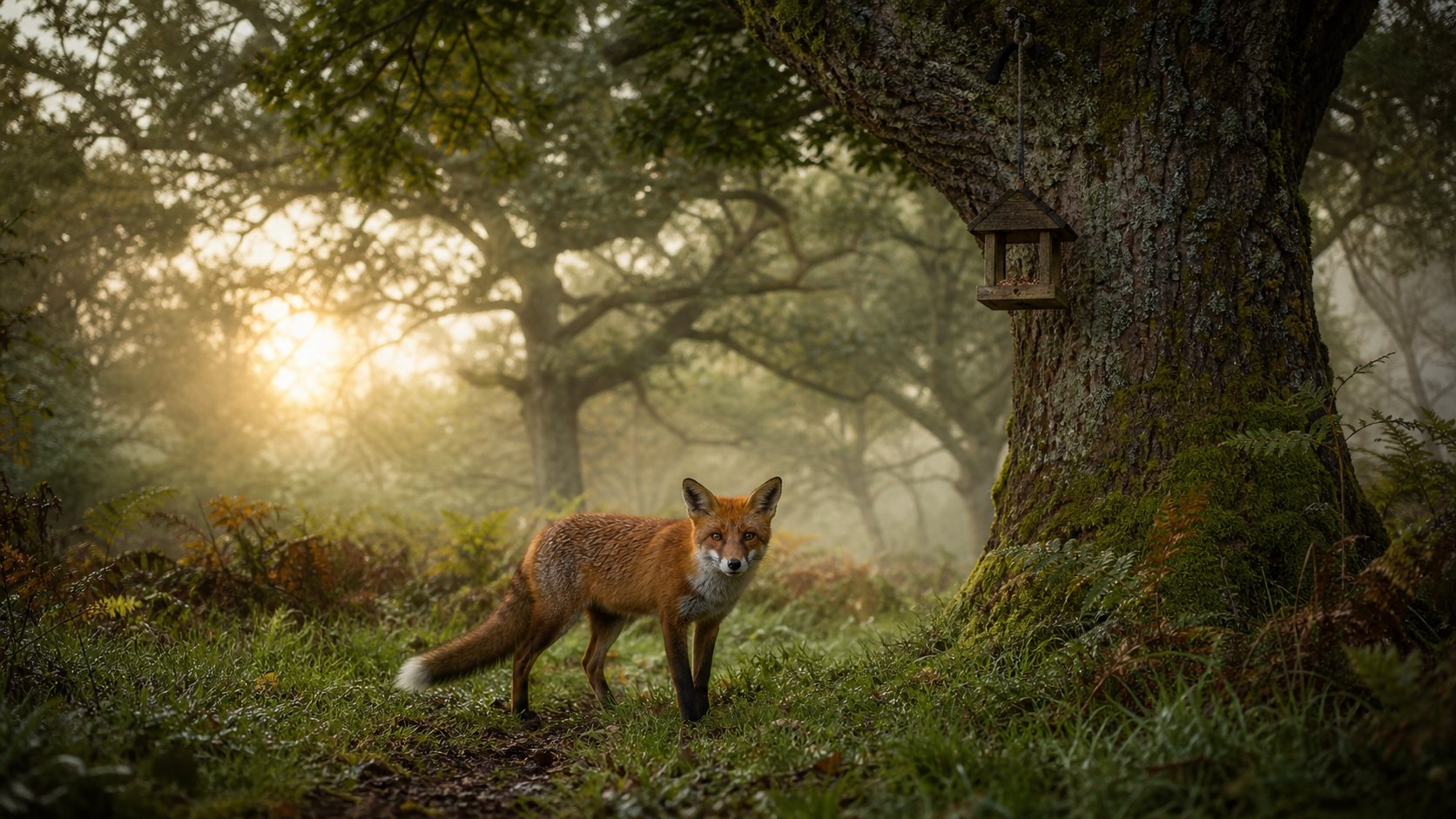
A fox from the puszcza who visits at first light, inspects the feeder, and belongs to no one — which is exactly the arrangement. “You become responsible, forever, for what you have tamed.” He remains untamed. They remain friends.
The collection
Natural cloth only: linen, wool, leather, velvet. Suspenders on working days, tailoring when the world invites.
Inheritance, worn lightly.
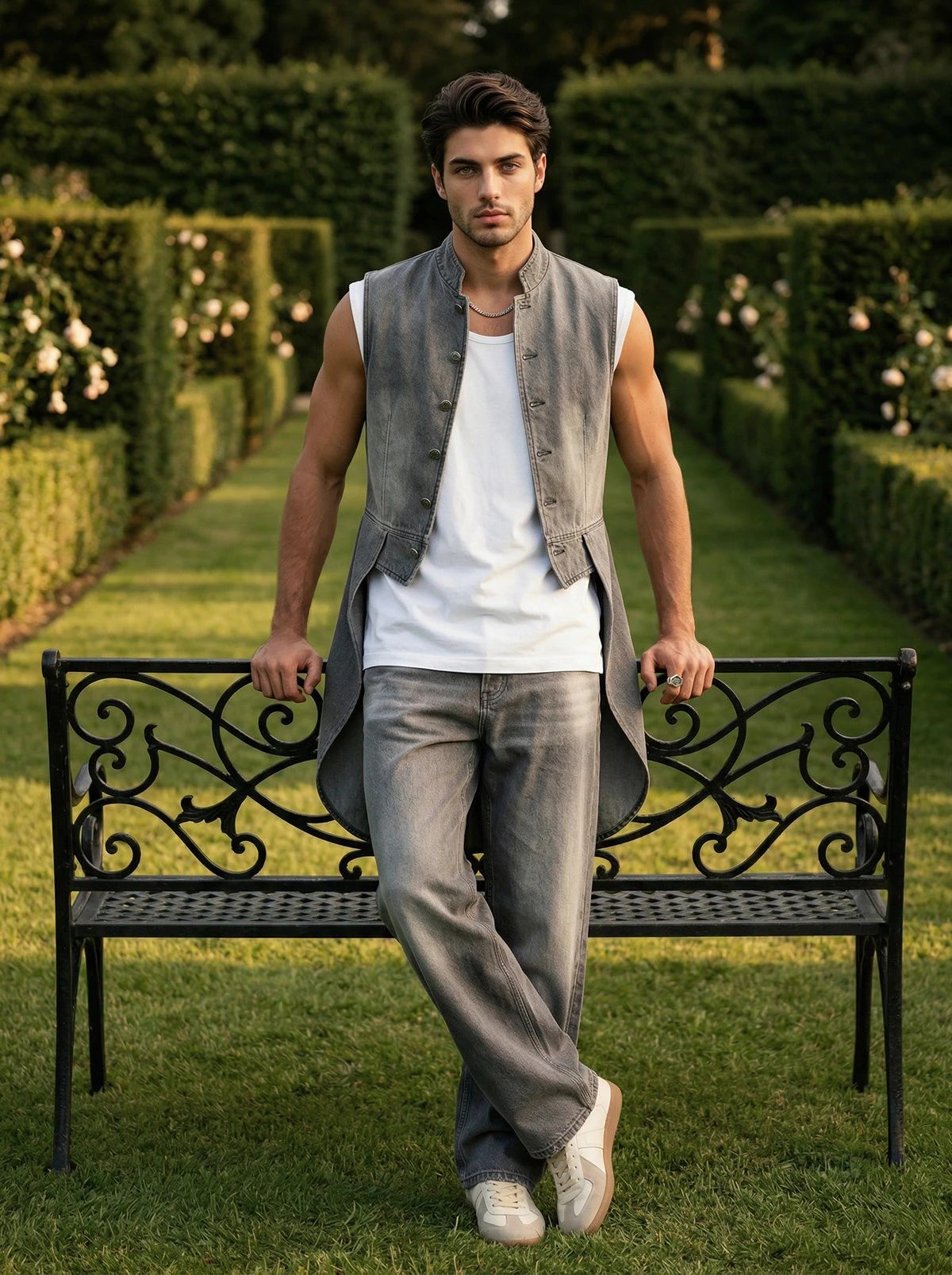
Porcelain, lake air, restraint.
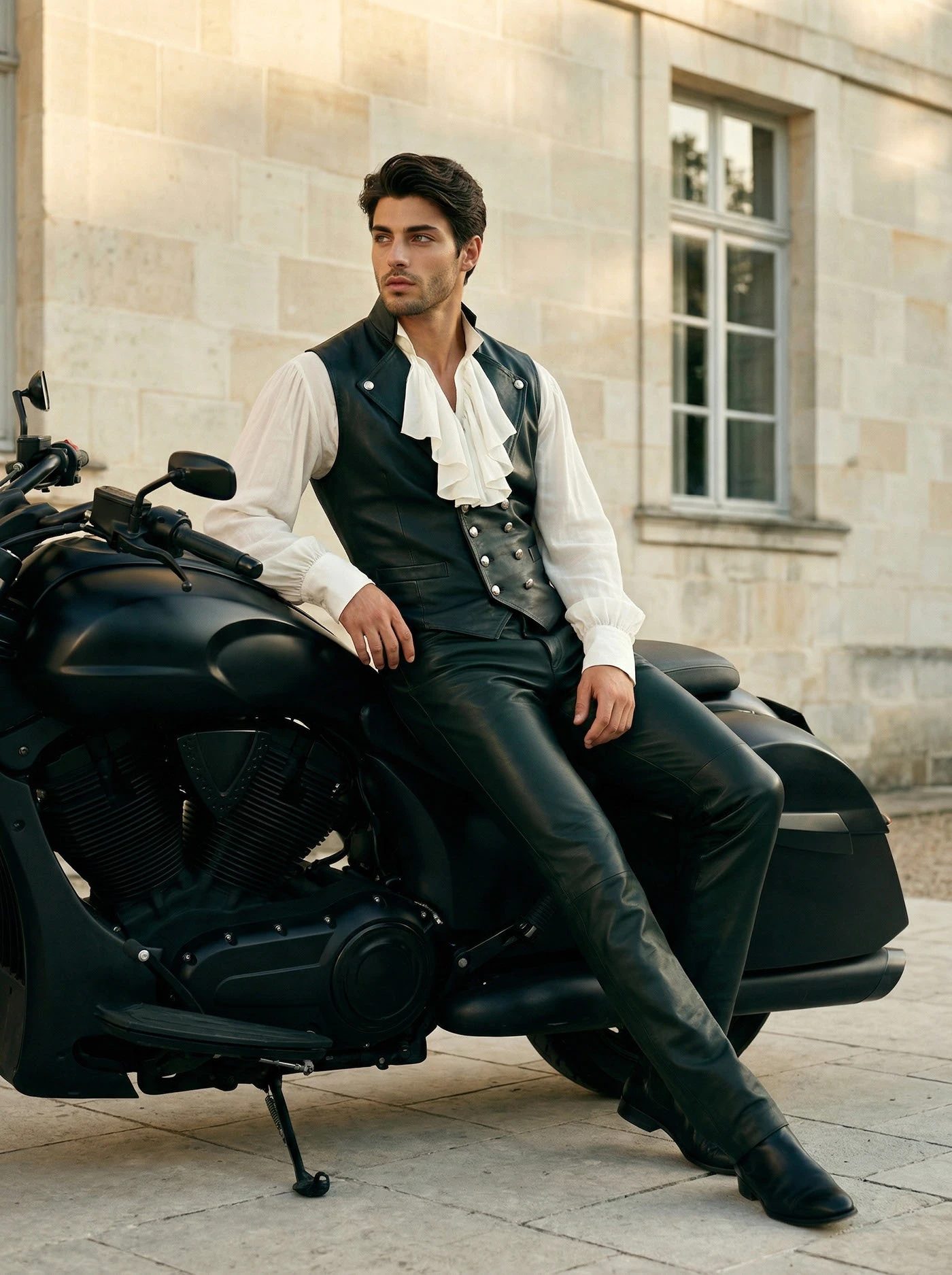
Leather, ivory cotton, quiet rebellion.
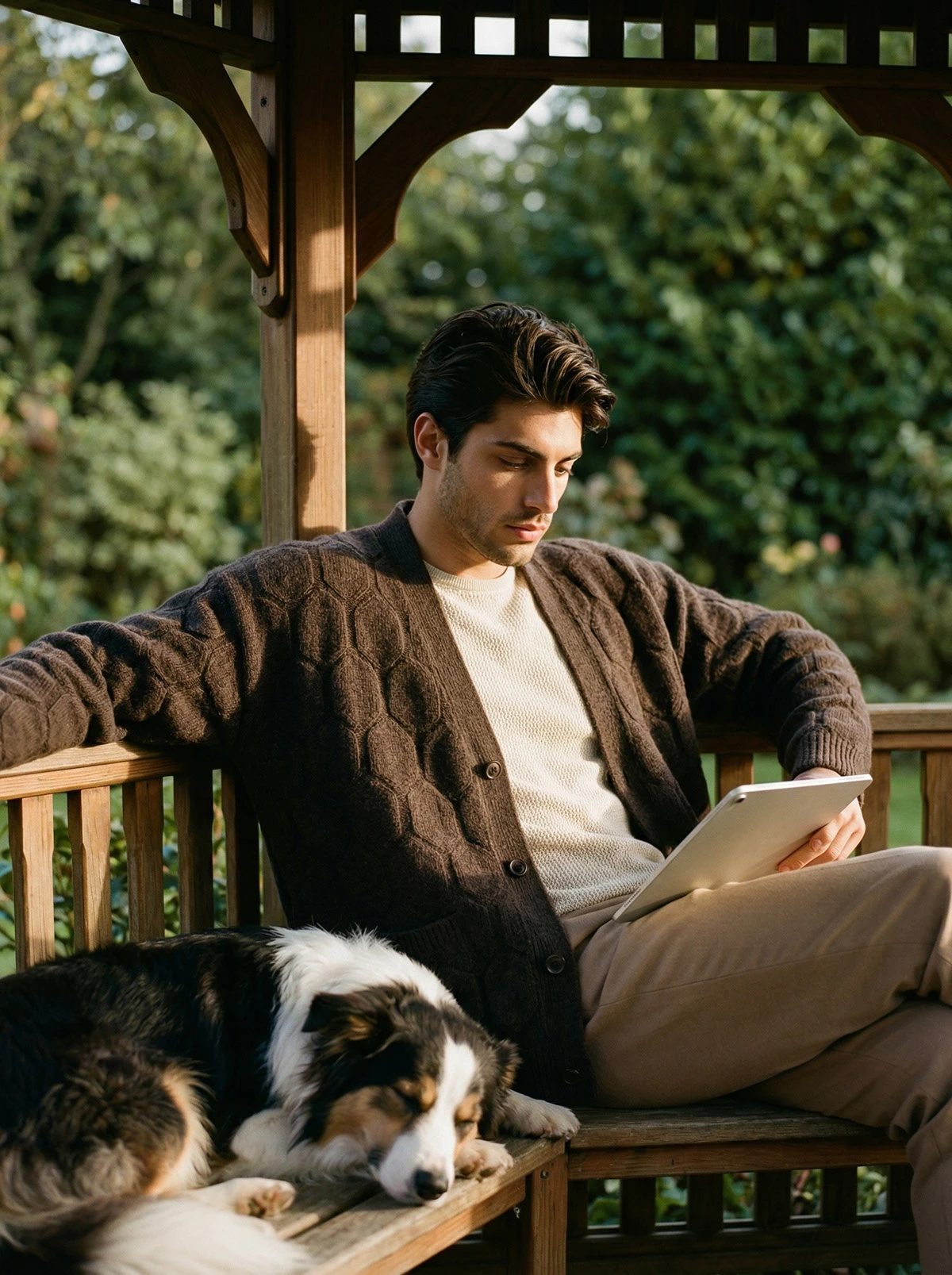
A book, a dog, nowhere to hurry.
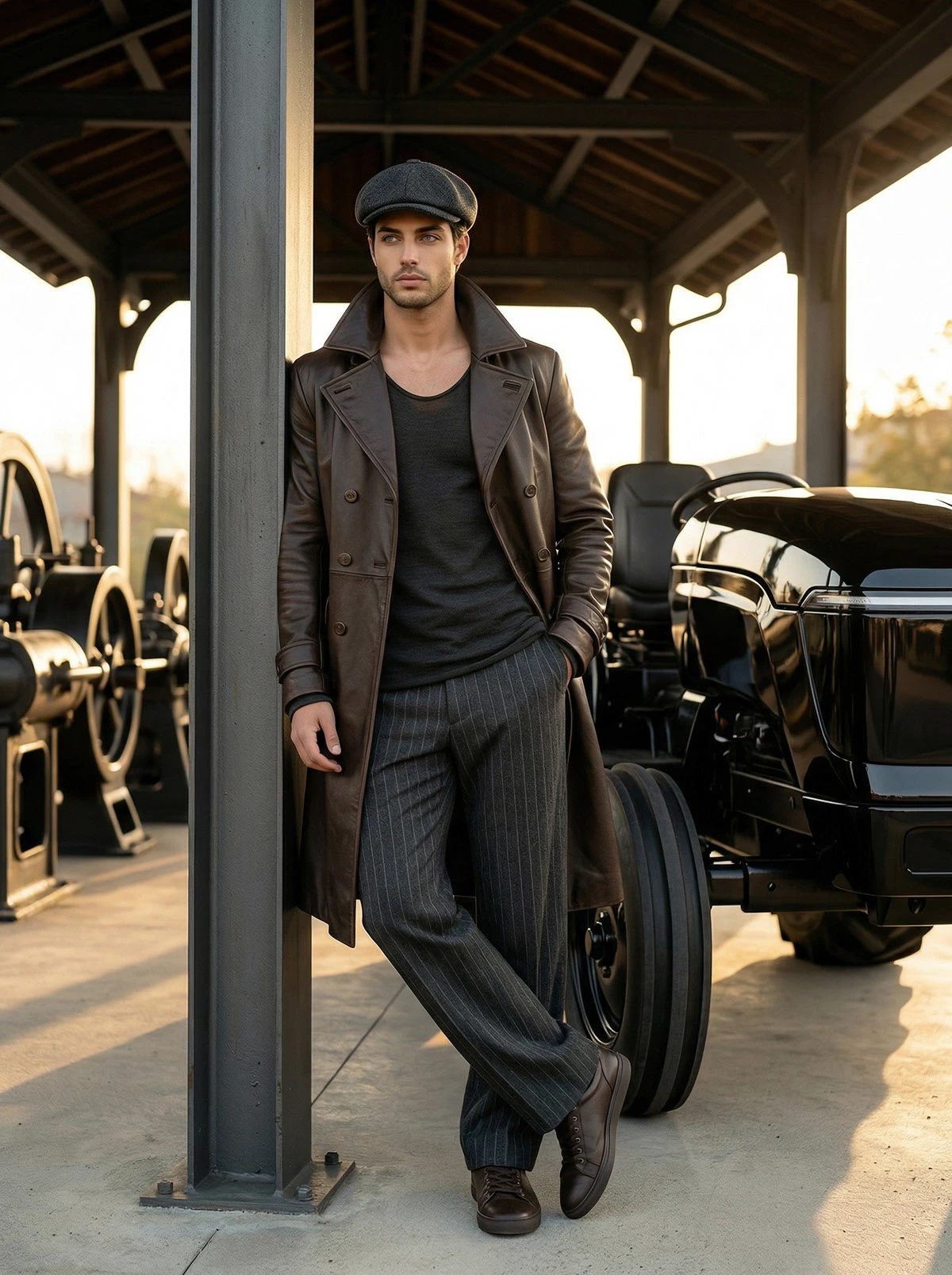
A flat cap against the sky.
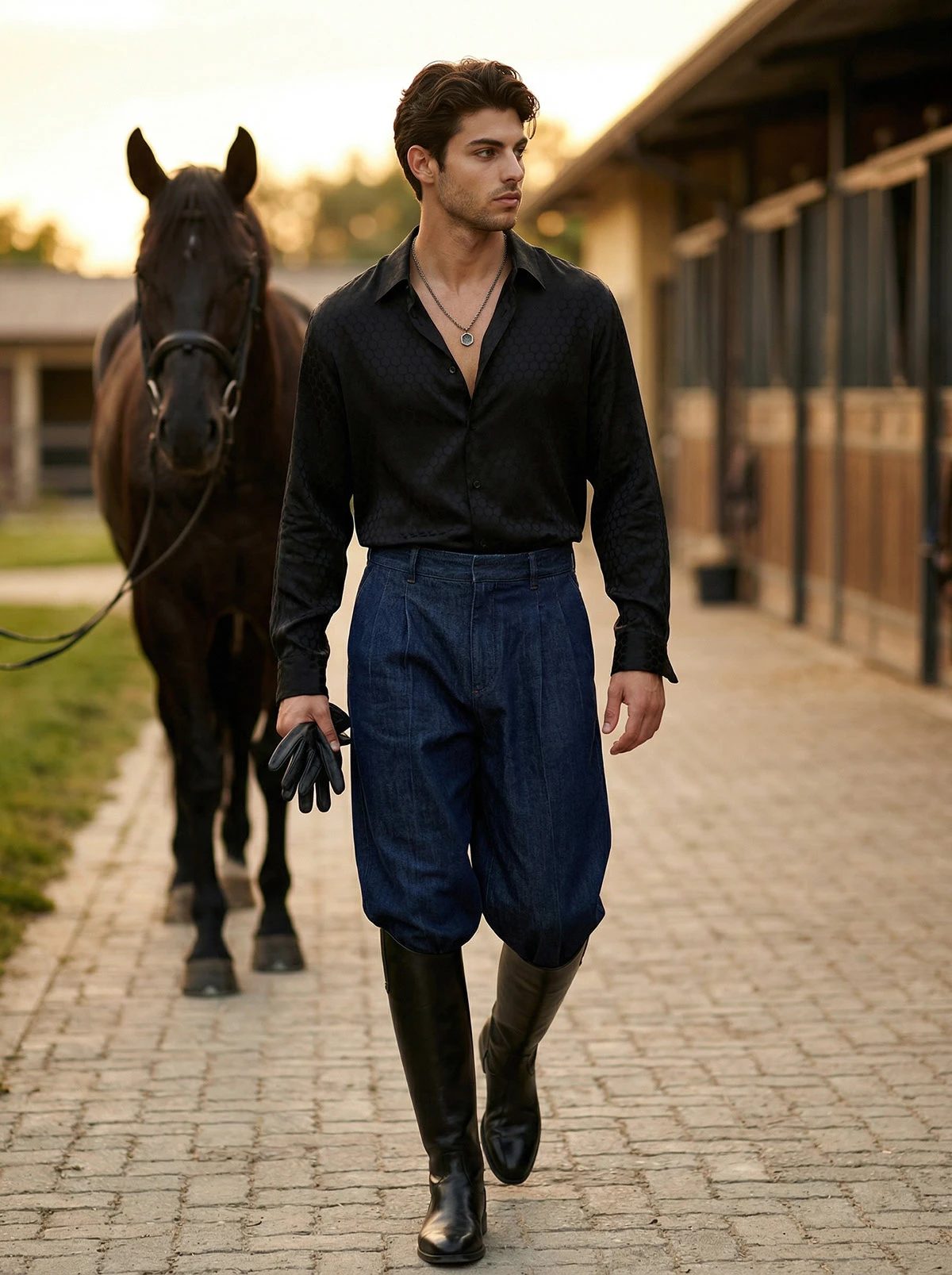
The oldest dress code on the estate.
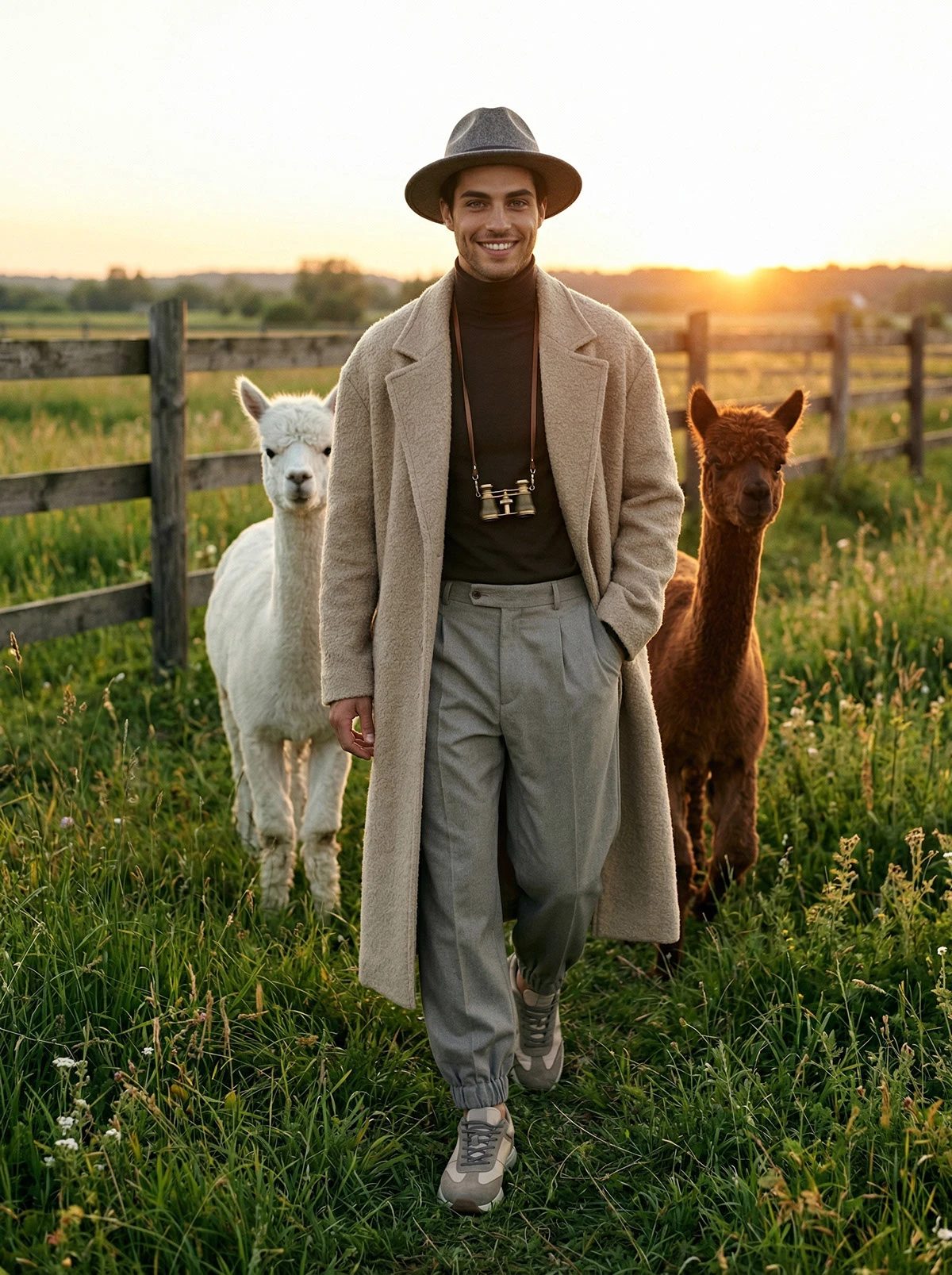
The evening inspection, alpacas attending.
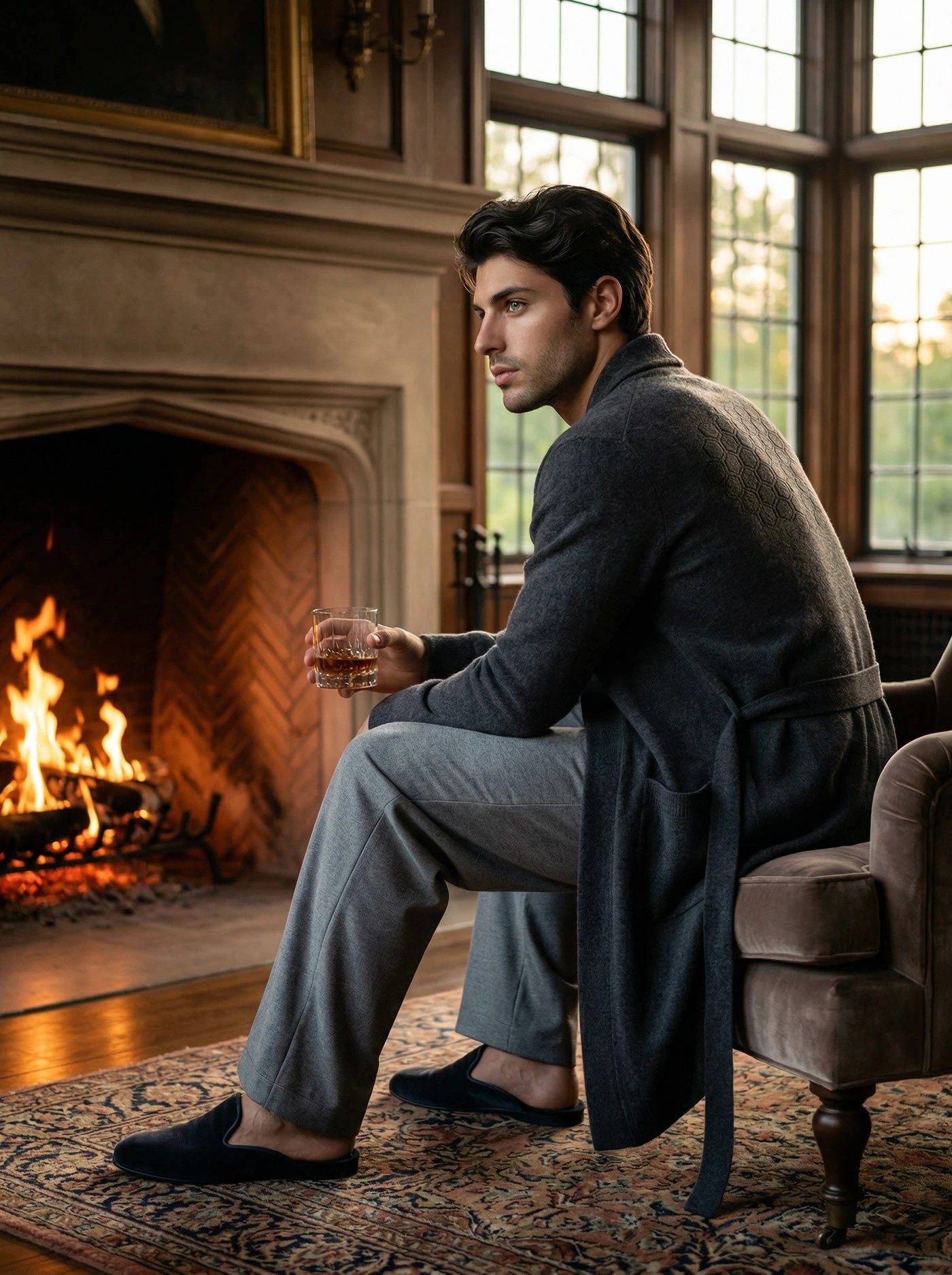
Firelight, and the last page of the day.
New looks are photographed between work and weather — the world outside sees them first.
See them on Instagram ↗The hive mark
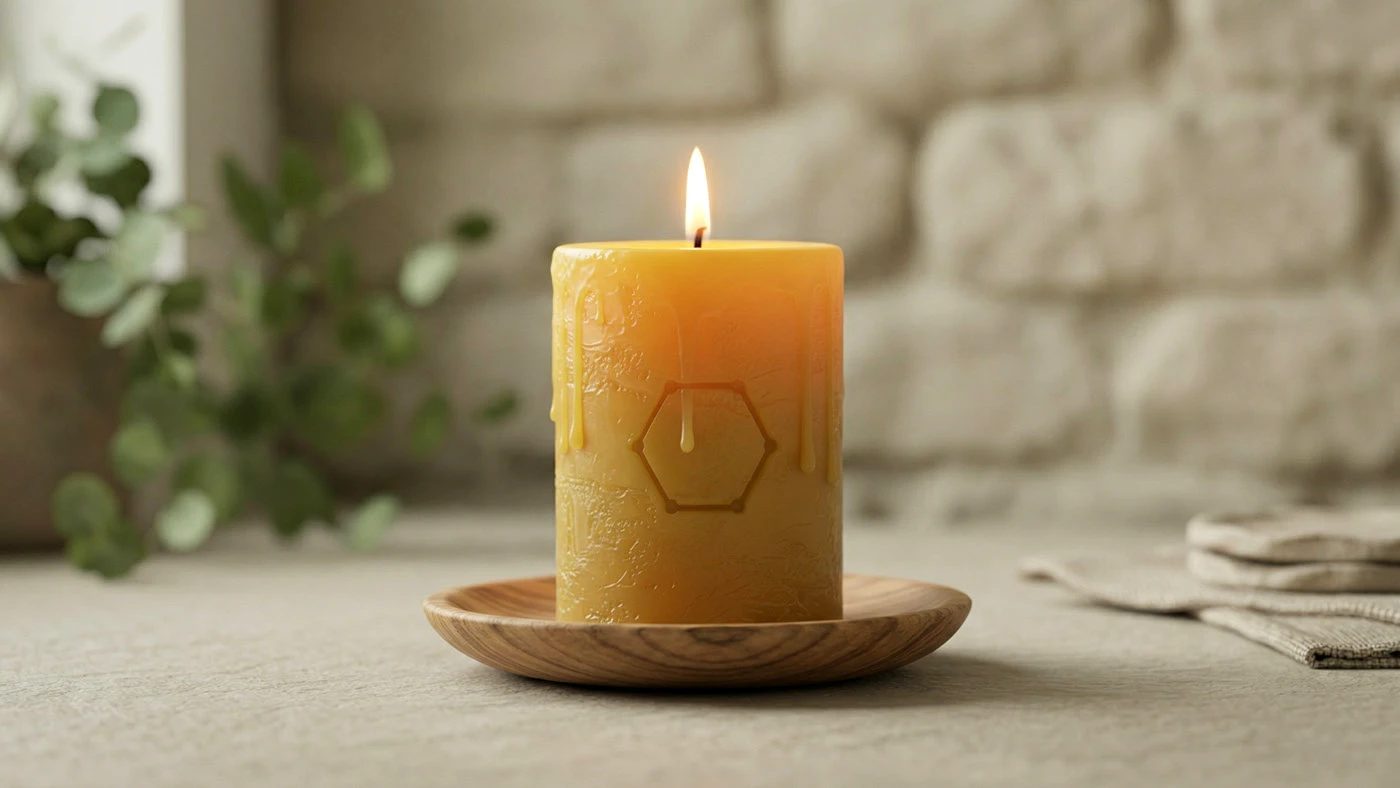
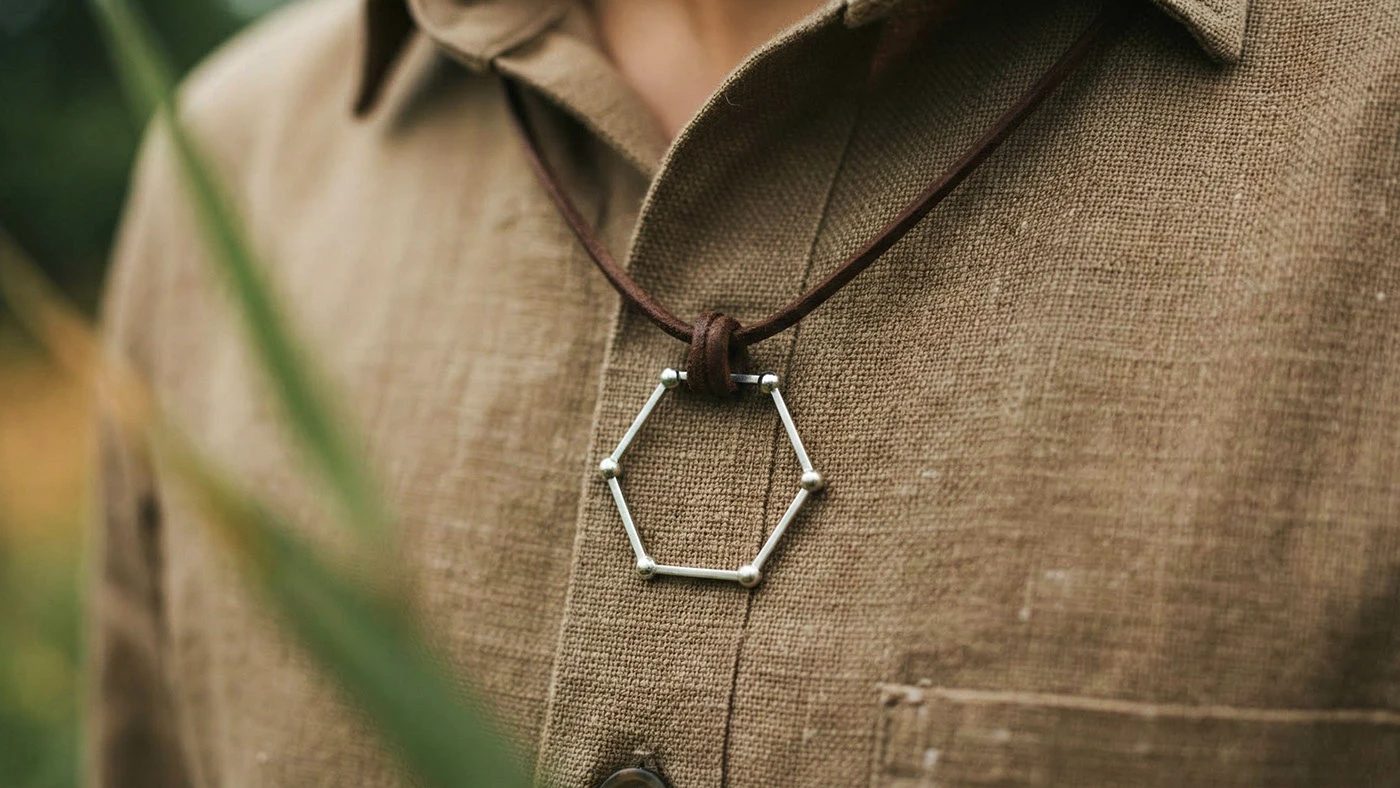
On some objects around the estate there is a small symbol: a hexagon, flat above and below, a dot on every corner.
It is the geometry of the hive — the most honest architecture on the land, where nothing is wasted and everything is shared. The house merely took the hint. The mark turns up on a honey jar, in sealing wax, stitched quietly into a cuff, cut into a bird feeder. No one explains it. It is simply how things from here sign themselves.
Balance, craft, quiet continuity — three words the estate tries to deserve every season, and a signature small enough never to shout.
See it on the shelf ↓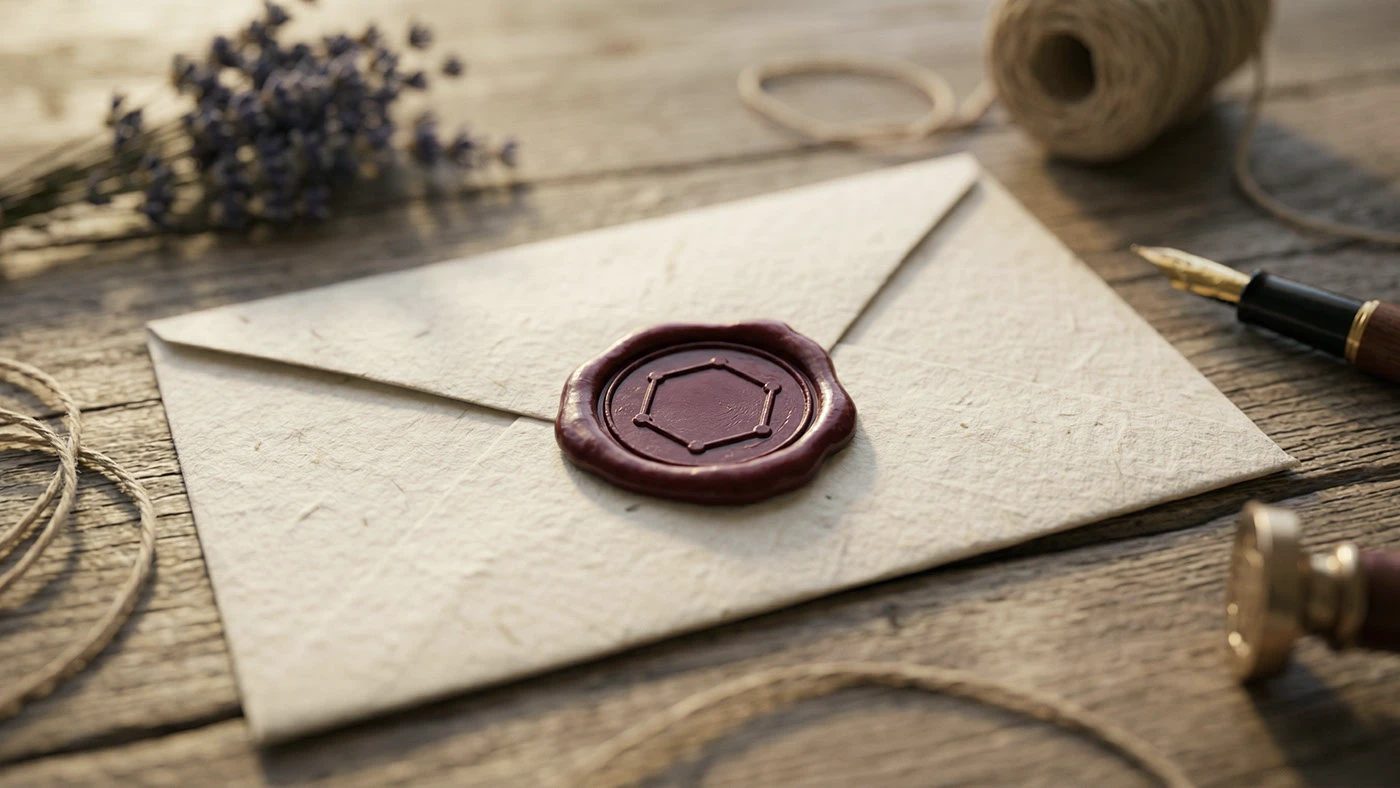
The estate shelf
An old house with gardens is a practical problem. These are the answers the estate actually uses — cloth that lasts, tools with weight, porcelain that holds the heat to the last page.
Honestly, as a house should: partner links pay the estate a small commission at no cost to you; the rest are plain recommendations. A thing joins this shelf only after it has been lived with for a season. If you'd rather help directly, the Telegram diary accepts stars on its pages — twelve stars is a jar of something golden.
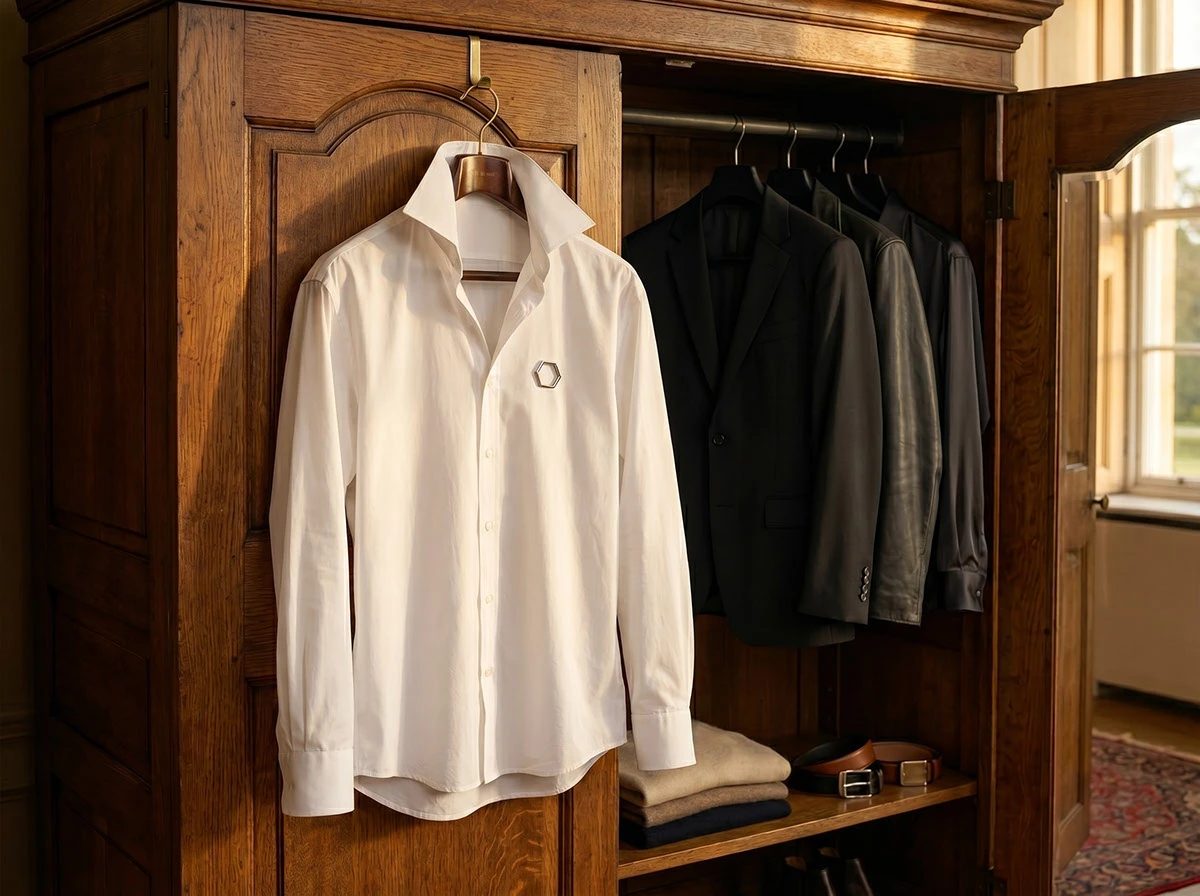
Wax, wool and velvet that survive a forest road and still pass at dinner.
Open the shop ↗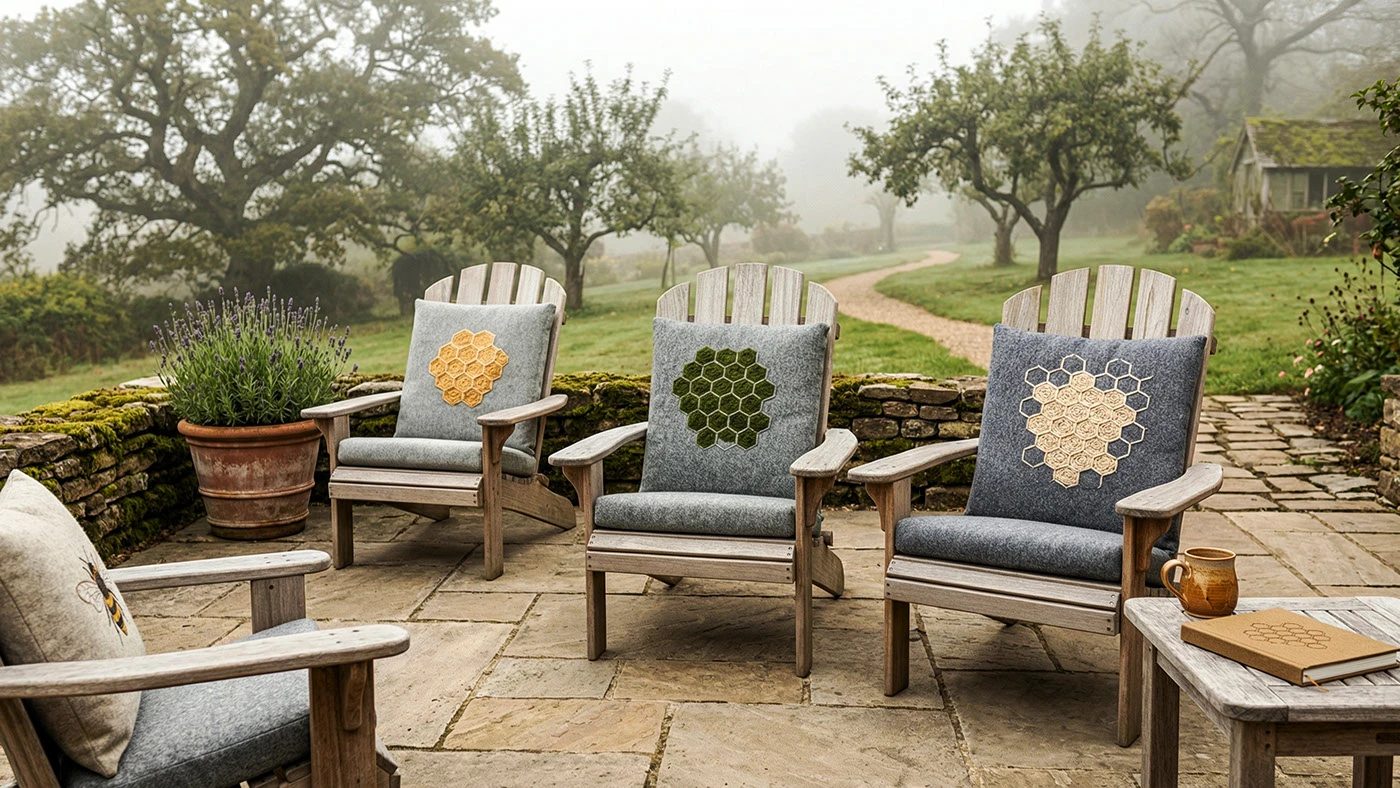
Shirts, sheets and terrace cushions — the estate's summer uniform, softening yearly.
Open the shop ↗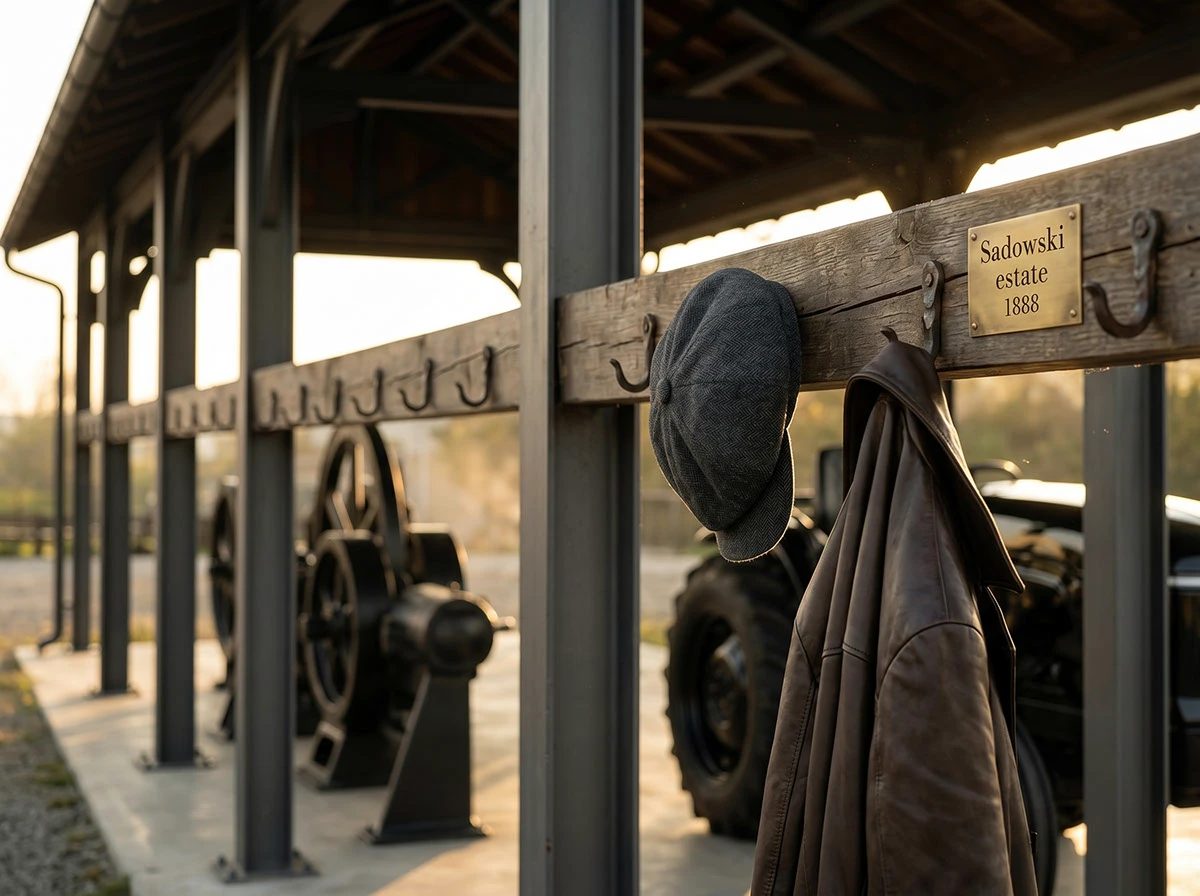
Tested between the stable and the lake, in all four tempers of the year.
Open the shop ↗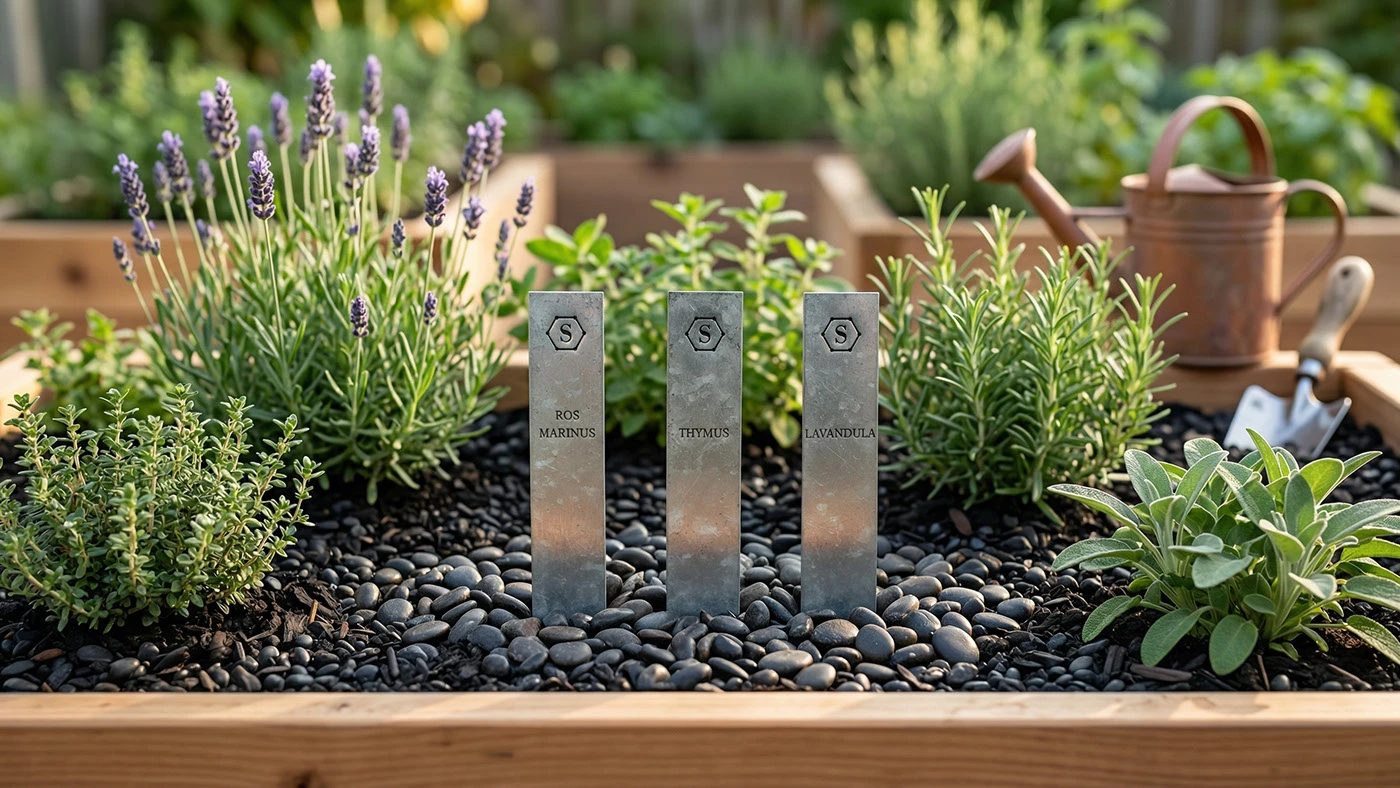
Japanese steel for the orchard rows. Bought once, sharpened for decades.
Open the shop ↗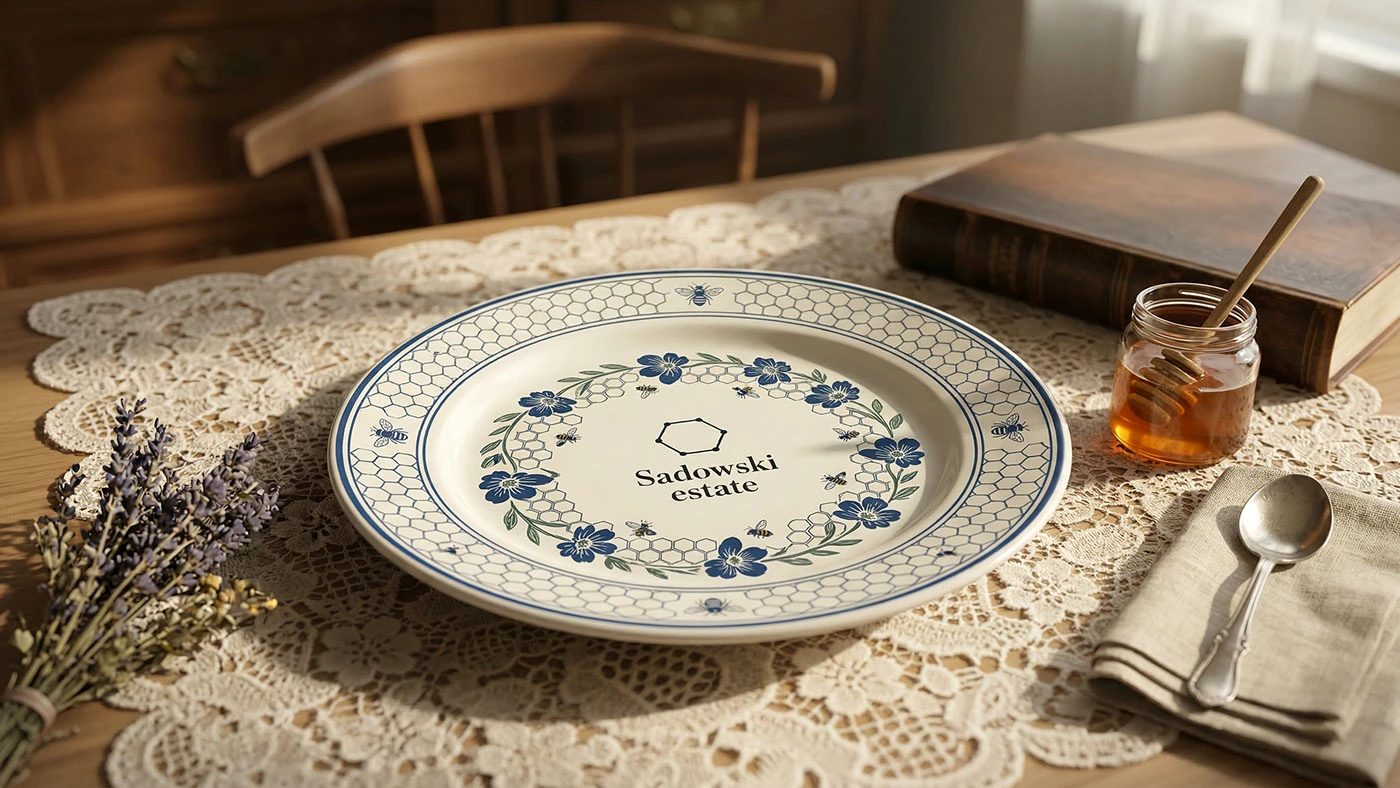
Stoneware that holds the heat to the last page of the evening.
Open the shop ↗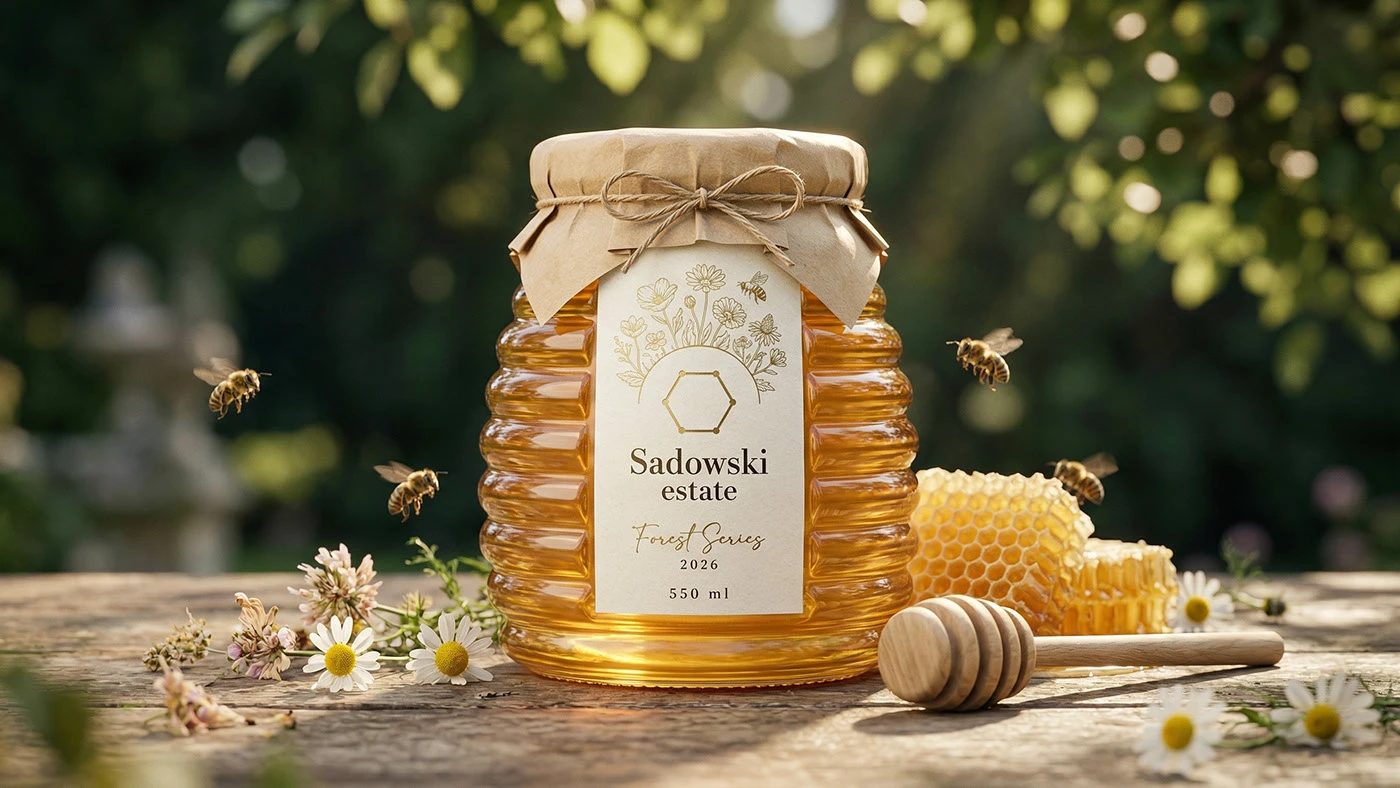
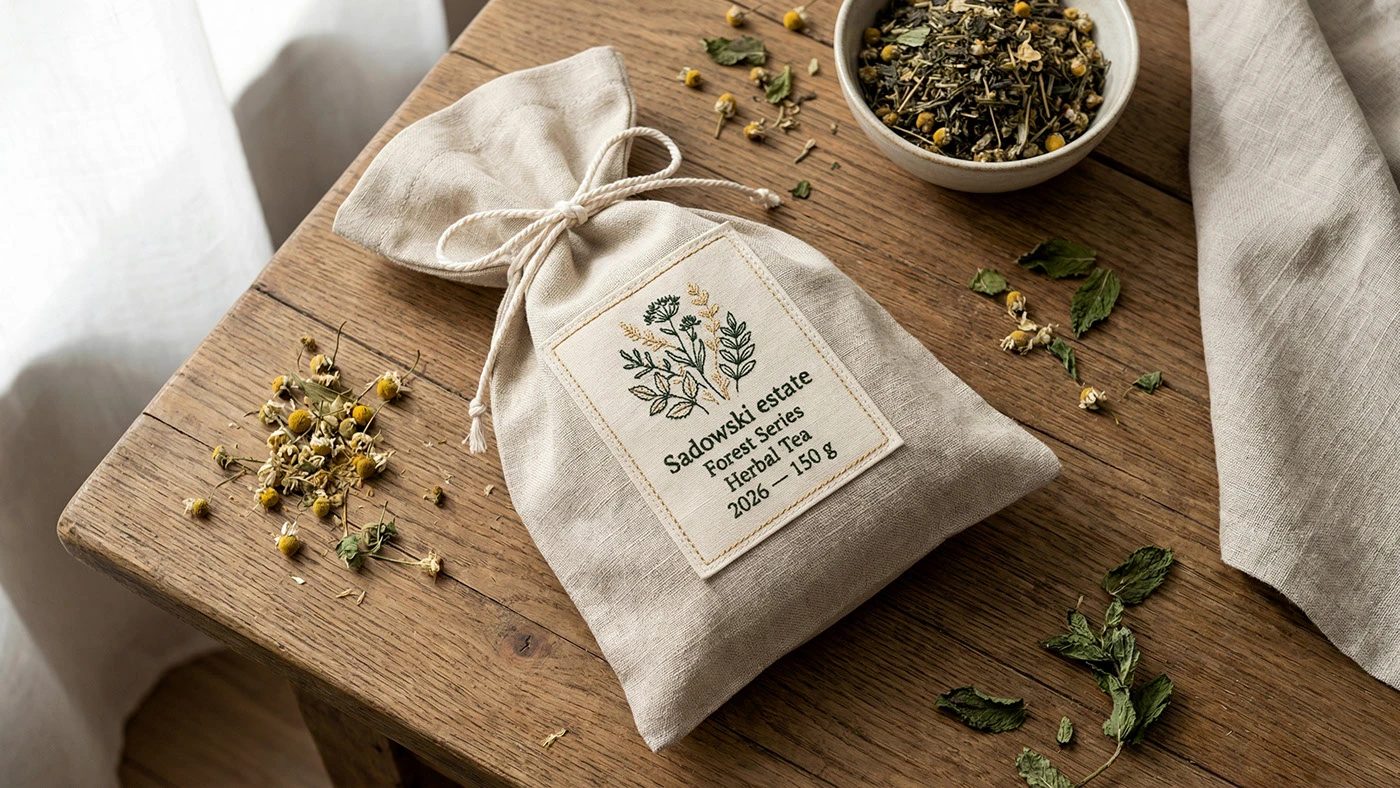
Teas and preserves worthy of the library's oldest cups. Honey, obviously, is ours.
Open the shop ↗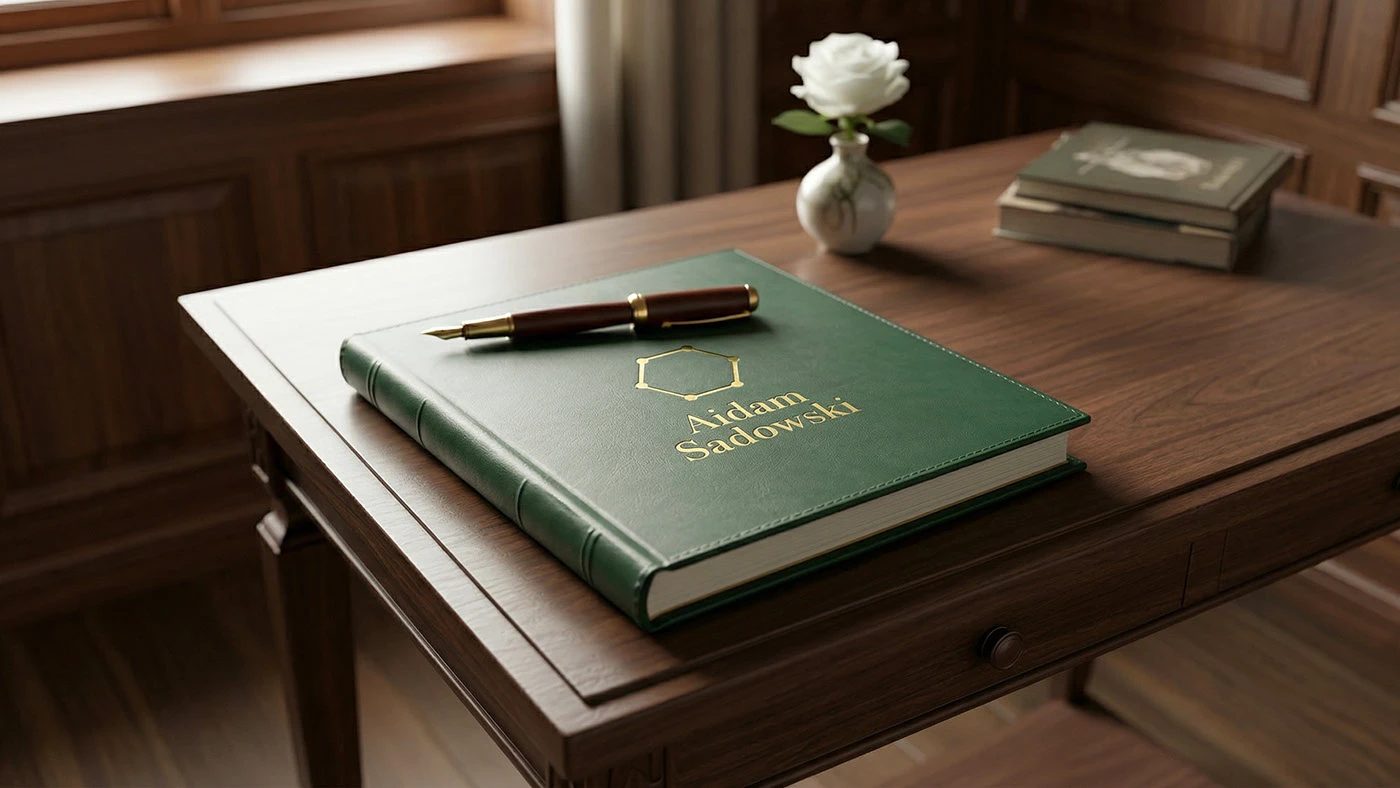
Shelves where the library's gaps are filled, one winter at a time.
Open the shop ↗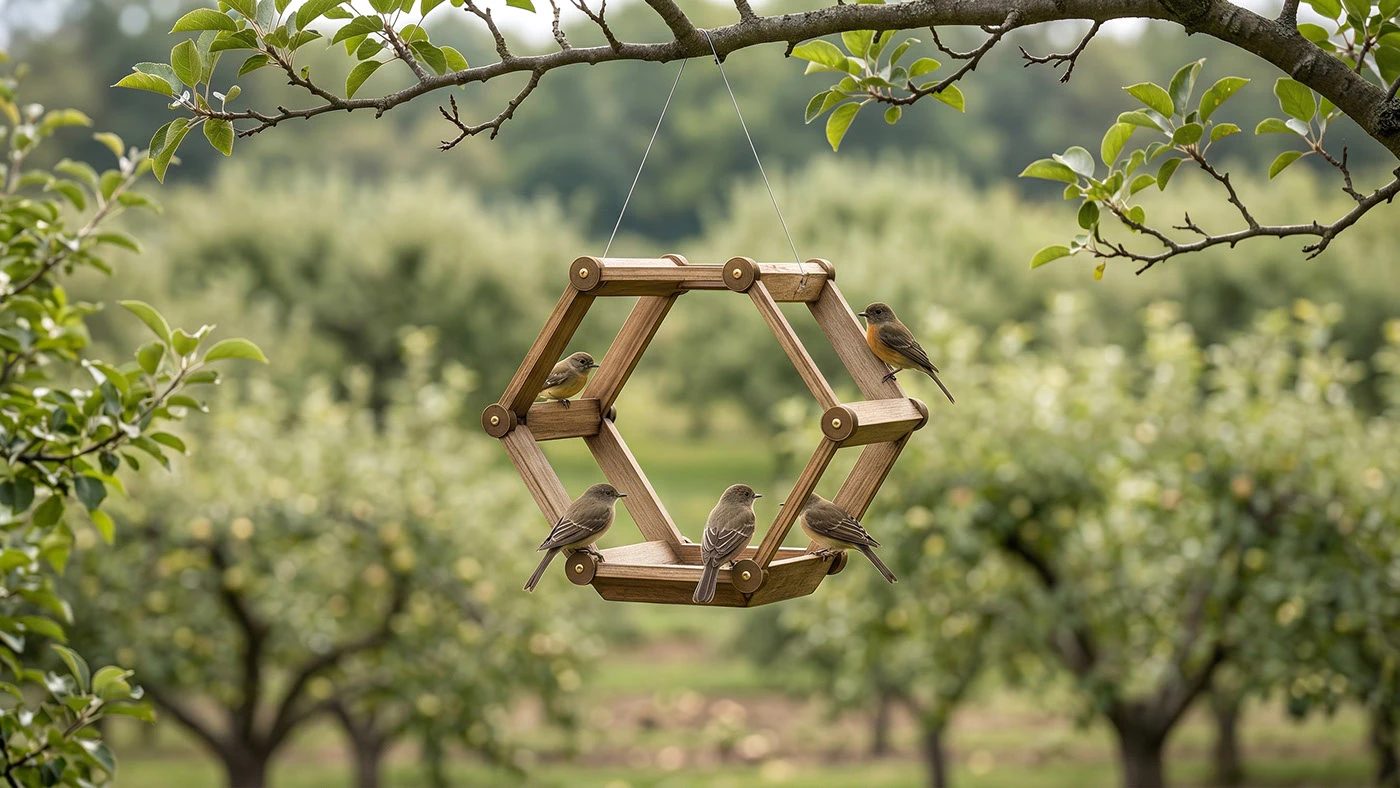
Feed, care and one hexagonal feeder — approved by Aimon, inspected by Ailos.
Open the shop ↗Correspondence
Editorials, film, partnerships, a stay in the guest rooms, or simply a question about bees — letters are answered from the library, usually after the evening rounds.
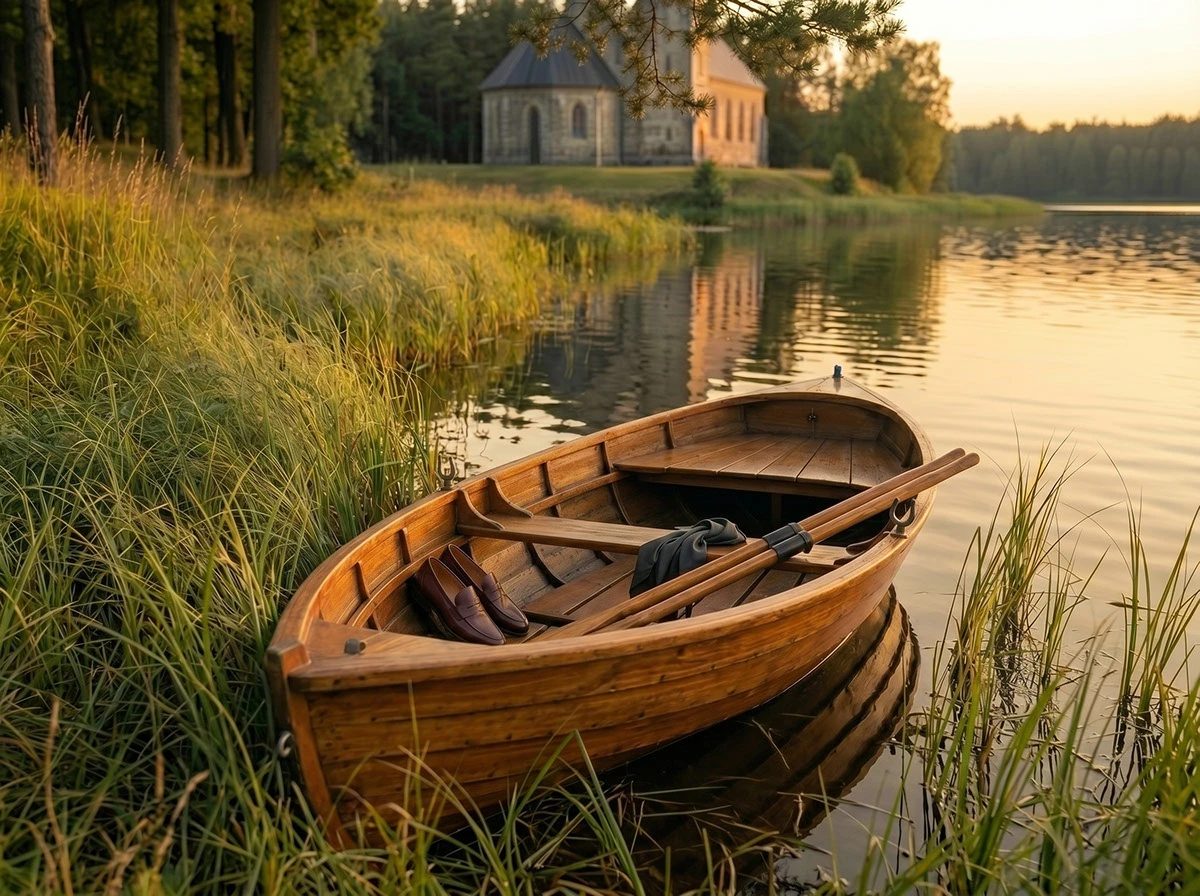
A young man. An old house. Fields breathing under the sky.
Perhaps this is only a story — or perhaps it is something else entirely. Would you like to believe?
And if the diary keeps you company, it accepts stars in Telegram — small lights for a big old house.